Many homeowners are unsure whether their property already has cavity wall insulation, especially if the home is older or if previous improvement work was carried out years ago. Knowing this is important because it affects your energy performance, potential heat loss, and the need for any removal or replacement work. With the right guidance, you can carry out several checks yourself before arranging a professional inspection, helping you understand the current condition of your home’s walls.
9 Ways To Identify Existing Cavity Wall Insulation
1. Start With The Outside Walls
The exterior of your home often reveals the most reliable visual signs. Most cavity wall insulation is installed by drilling small holes, injecting insulation, and then filling the holes afterwards. These holes are usually spaced in a neat grid pattern across the brickwork. The patches may be very subtle, but they often appear slightly different in colour or texture compared to the surrounding bricks.
Take your time walking around the entire property. Look at the front, rear and side elevations, as different installers may have used different patterns. Even if the patches blend in well, you may still spot circular outlines or a lighter-coloured filler. This is one of the strongest indicators that insulation has previously been added.
2. Check If Your Home Has Cavity Walls In The First Place
Before checking for insulation, you need to confirm that the walls actually have a cavity. Homes built before the 1920s often have solid walls, which contain no cavity at all. One simple check is to look at the thickness of the external walls. Solid brick walls tend to be around 220 to 230mm thick, while cavity walls are typically closer to 280 to 300mm.
You can check this by examining the door or window reveals. A deep reveal often indicates a cavity wall, whereas a shallow reveal usually points to a solid wall. This step is important because it tells you whether insulation is even possible.
3. Consider The Age Of Your Home
The age of your home offers helpful clues about whether cavity wall insulation might already be installed. Many homes built after the mid-1990s were constructed with insulation included as standard. Properties built earlier may have had insulation added as part of a government grant or energy improvement scheme, especially during the 1970s, 1980s and 2000s. If you know your home was built during one of these periods, there is a greater chance that insulation may already be present.
4. Look For Cold Spots And Heat Loss Indoors
Although not as precise as a visual inspection, the thermal behaviour of your home can offer valuable hints. If your home warms up quickly and remains warm for a long time after the heating turns off, this may suggest that insulation is already in place and performing reasonably well. On the other hand, if certain walls feel noticeably cold to the touch or if rooms cool down rapidly, this can indicate missing insulation or older insulation that may have started to fail.
Take notice of any patches of condensation, persistent cold areas, or walls that feel damp. These can all point to issues inside the cavity, including insulation that has slumped or deteriorated over time.
5. Review Your Energy Performance Certificate
If you have an EPC for your home, check the section relating to wall construction and insulation. Some certificates will confirm that cavity wall insulation is present. Others may list insulation as “assumed,” which means the assessor could not confirm visually. While EPCs are not always fully accurate from an insulation standpoint, they still offer helpful context and can support the findings from your visual checks.
6. Check For Any Documentation Or Old Installation Records
If you moved into your property recently, the previous owner, landlord or housing association may have documentation confirming insulation installation. Many installers provide certificates, invoices, or paperwork for grant-funded installations. Even older installations often leave a paper trail that can help you confirm what was done and when.
7. Speak To Neighbours With Similar Properties
If your home is part of a street or estate built at the same time, speaking to neighbours can offer extra insight. If several properties around you have insulation installed, it increases the likelihood that your home may have been part of the same project. This is especially common in areas where council-funded or government-backed insulation schemes were carried out.
8. Examine The Loft For Clues About Energy Improvements
While loft insulation does not confirm cavity wall insulation, it does suggest that the property has undergone energy efficiency improvements in the past. Homes with well-maintained loft insulation are often the same homes that received cavity wall insulation during improvement schemes, especially in the early 2000s.
9. When To Arrange A Professional Cavity Wall Survey
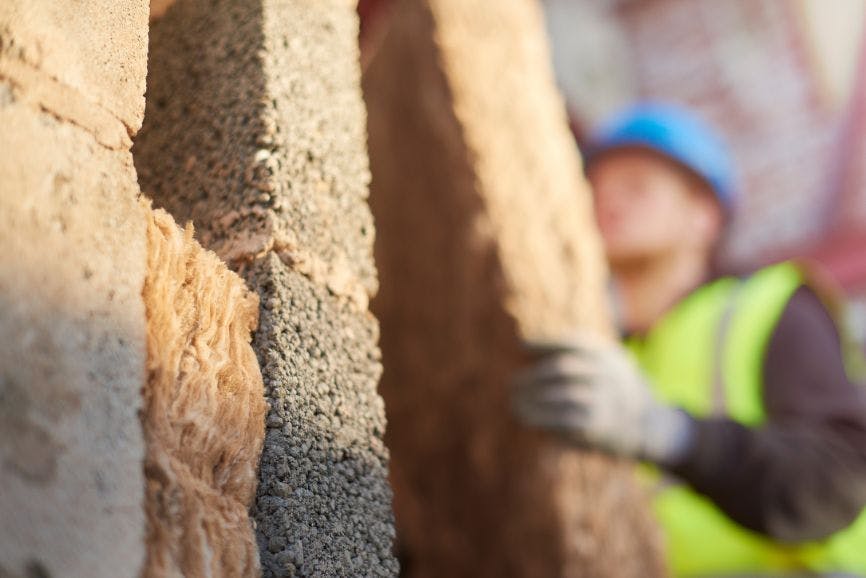
If your checks leave you unsure or if you want complete confirmation, a professional cavity wall inspection is the most reliable solution. A specialist uses equipment such as a borescope to view the inside of the cavity directly. This allows them to confirm whether insulation is present, the type of material used, its distribution and its current condition.
A professional survey also identifies whether insulation has become damp, compacted or unevenly spread. These are common problems that often lead to damp, mould growth or cold patches inside the home. Booking a specialist inspection gives you definitive answers and ensures you understand what action, if any, is needed next.
Need A Cavity Wall Check In South Wales, Swansea, Cardiff Or Bristol?
Cavi Clear Ltd provides expert cavity wall inspections, insulation removal and detailed assessments to help you understand exactly what is in your walls. Call 01639 790426 or 07852 229017, or complete our contact form to schedule a professional survey today.