
Black mould-like staining on an external wall can look alarming, especially when it appears close to windows, doors or areas where indoor mould has also been noticed. However, dark marks on masonry are not automatically proof of penetrating damp or a serious structural problem. In many homes, the staining is algae, mould or other organic growth encouraged by shade and slow drying.
This guide provides a sensible starting point. It explains what external staining may indicate, what it cannot tell you on its own, and which simple checks can help you decide whether a damp assessment is needed.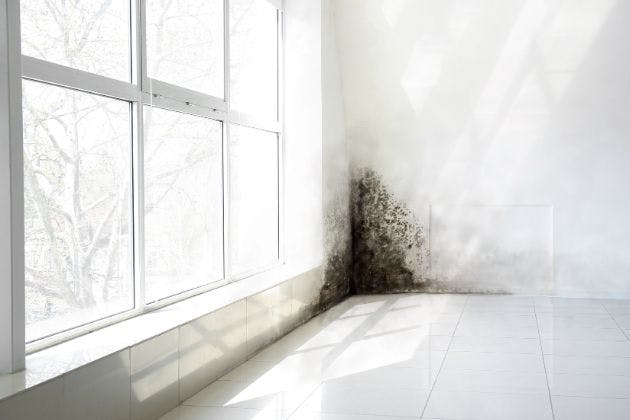
What external staining usually means
External walls stay wetter for longer when they receive little direct sunlight or airflow. North-facing walls, shaded elevations and areas beneath trees are particularly likely to develop green, brown or black staining. Render, textured coatings and porous masonry can hold moisture at the surface, allowing algae and mould-like growth to take hold.
Local conditions can make the problem worse. Leaking or overflowing gutters, blocked gullies, dripping downpipes and soil or paving that sits too high against the wall can all create repeated wetting and splashback. In these situations, the marks may be a sign that water management needs attention, but they still do not confirm that moisture is travelling through to the inside.
Surface growth or a moisture problem?
Surface growth is normally patchy and more noticeable in shaded, damp areas. It may feel superficial, spread slowly and improve after the wall has been cleaned and allowed to dry. External staining alone cannot diagnose dampness inside your home, because the outer face of a wall is exposed to rain, condensation from the air and normal weathering.
A moisture problem affecting internal walls tends to produce a different set of clues. You may see peeling decoration, blistering paint, a damp patch that becomes worse after rain, or mould that keeps returning despite regular cleaning and ventilation. The position of the internal damage matters too, as stains around ceilings, corners, windows or skirting boards can point towards different sources.
Dark growth on a shaded outer wall, with no internal symptoms, is often surface contamination.
Staining below a faulty gutter or downpipe may relate to repeated external wetting.
Persistent indoor mould or damp patches need a closer assessment rather than assumptions based on external marks.
Salt-like deposits, crumbling finishes or damaged pointing can indicate moisture movement through the wall.
Checks to make before arranging major work
Start with drainage and splashback. Check that gullies are clear, rainwater is flowing freely and downpipes discharge safely rather than spilling against the masonry. Look for overflowing joints, cracked hopper heads and water collecting beside the house after rainfall.
Next, inspect the wall finish from ground level. Look for open joints, cracked or hollow render, gaps around pipes and damaged sealant around windows and doors. Small defects do not always cause internal damp, but repairing them can reduce water entry and prevent minor damage from becoming more extensive.
If the wall is suitable for cleaning, use a gentle approach. Remove loose growth with a soft brush, follow the instructions for a suitable masonry or patio cleaner, and protect nearby plants, windows and painted surfaces. Avoid aggressive pressure washing, which can damage pointing, drive water into cracks and leave porous masonry wetter for longer.
Do not mix cleaning chemicals, and wear gloves, eye protection and suitable clothing. If the surface is high, fragile or heavily contaminated, using a professional cleaner is safer than working from a ladder or applying a strong product without understanding its effect on the wall.
When to investigate further
Arrange a professional opinion if mould or condensation inside the property keeps returning, even after improving ventilation and heating. Further investigation is also sensible when damp patches appear after rain, musty smells persist, or finishes repeatedly blister, peel or deteriorate.
Pay attention to white, powdery or crystalline marks known as salt deposits. These can be left behind as moisture moves through masonry and evaporates, although they need to be considered alongside the wall construction, location and other evidence. External black staining by itself is not enough to justify major damp proofing work, waterproof coatings or cavity-related repairs.
Start with evidence, not assumptions
A careful inspection should identify whether the main issue is surface growth, poor drainage, defective pointing or moisture affecting the building internally. This start-here approach can prevent unnecessary work while ensuring genuine problems are not ignored.
If you are concerned about staining, internal mould or recurring damp, contact Cavi Clear Ltd on 01639790426 to book a damp assessment. You can also learn more about damp proofing services and the checks that may be recommended for your property.
Where an inspection suggests a cavity issue, further investigation may recommend appropriate extraction or removal. The right next step should be based on the evidence at your home, rather than on external staining alone.